A family member dies, and within days the family is choosing between burial and cremation. For an attorney, that choice may decide whether the cause of death is ever proven. A private autopsy for wrongful death case work is often the only way to examine the body independently before the evidence is gone.
This guide is a practical checklist for wrongful death, personal injury, and medical malpractice attorneys, plus estate attorneys who advise families in the first days after a death. It explains how to preserve evidence after a death, who can consent, what the exam includes, and what to do if time has already run out.
Why the Window to Preserve Evidence Is So Short
Embalming changes tissue. Burial limits access. Cremation ends physical examination for good. An autopsy before cremation is the last chance to see what happened. The days between death and these steps are often the only chance to find pivotal evidence, which is why a medicolegal autopsy needs to be arranged fast.
The cremation rate in the United States makes the point clear. The National Funeral Directors Association reports that 61.8 percent of Americans were cremated in 2024. More than half of your future clients may lose their physical evidence the moment a form is signed.
Medical malpractice commentary also warns that cases can fail when no medical malpractice autopsy evidence exists. Without a documented cause of death, a strong claim can turn into a guess.
Private Autopsy vs Medical Examiner Autopsy
Many attorneys assume an open medical examiner case blocks any other exam. It does not. An independent autopsy can run alongside a coroner or medical examiner case, not against it.
Here is how the two compare:
- A medical examiner or coroner serves the public, and the exam may be limited to the cause and manner of death.
- A private exam answers the questions your case raises, such as whether a medical error played a part.
- The private pathologist will ask for hospital records, imaging, and any report the examiner has released.
Timing matters too. Attorneys often ask, why are medical examiner autopsy reports delayed? Backlogs in many states slow autopsies and their reports, and that delay can hold up a claim for months. Learn more about how a coroner and medical examiner office works so you can plan around it.
Who Can Authorize a Private Autopsy
Only the legal next of kin can give consent. The order of authority varies by state, but it usually starts with a spouse, then adult children, then parents and siblings. Ask the family who holds that authority before anything else.
Next of kin consent for autopsy should be written and signed. If family members disagree, sort that out quickly, because the body may be moved while they talk.
Attorneys can help by coordinating with the family and the funeral home. A call to the funeral director can pause embalming and hold the body while consent is arranged. The funeral home resources explain how this hand-off works in practice.
What Does a Private Autopsy Include?
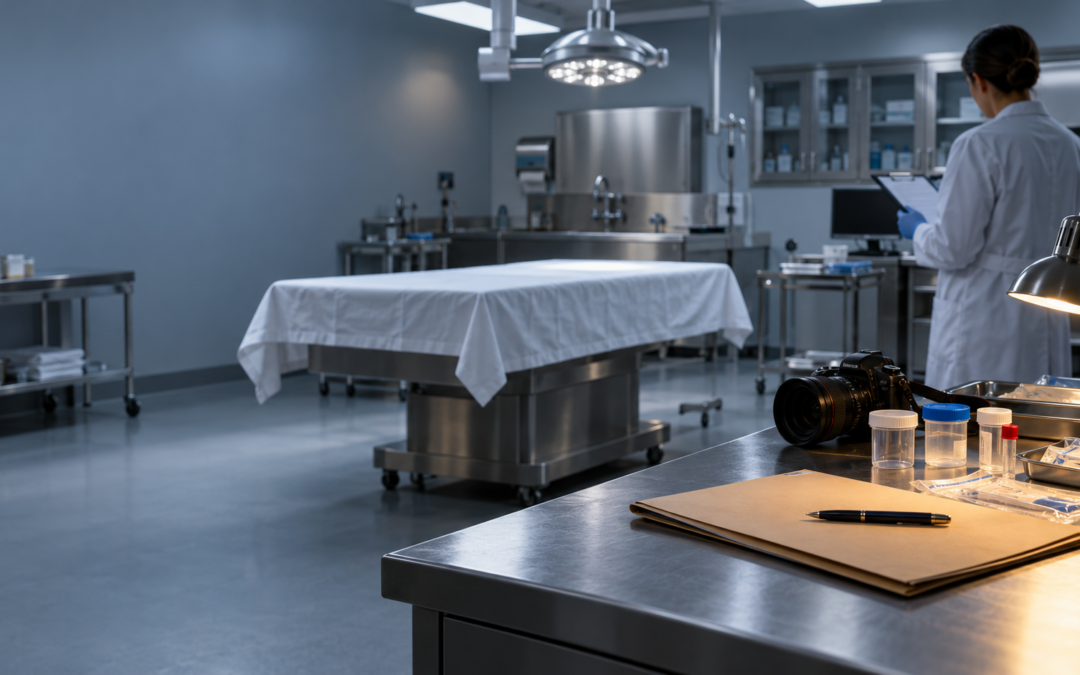
A full private autopsy is built for litigation. The package should include:
- Complete photographic documentation of the body and internal findings
- A microscopic slide summary from tissue samples
- Toxicology specimens, which are held for about four weeks
- Records archived for two years
- A preliminary anatomic diagnosis within 24 to 48 hours
The preliminary anatomic diagnosis in an autopsy gives you early direction. It tells you whether the case is worth pursuing before costs grow. The final report follows after pathology review and lab results return.
People often ask how long toxicology specimens are kept after an autopsy. The answer here is roughly four weeks, so request any testing early. You can read more about what a private autopsy covers before you call the family.
Why the Pathologist Must Be Available to Testify
Findings help only if someone can defend them. A board certified pathologist with training in forensic pathology can explain the exam in plain terms to a judge and jury. Without that person, a report is paper with no voice.
Look for a team that provides expert witness work and deposition support. A forensic pathologist expert witness should be present for the review process, answer opposing counsel’s questions, and stand behind the findings under oath. Ask about this before the exam is performed, not after.
Can You Get an Autopsy After Cremation?
Once cremation is complete, no exam is possible. That is the hard answer to the question “can you get an autopsy after cremation,” and it is why speed matters. Two fallback options remain when the window is missed before burial or other steps.
- Second opinion autopsy. If an exam was already done, a second opinion re-autopsy can review the findings and fill gaps.
- Exhumation autopsy. If the body was buried, a court order or family consent may allow exhumation and a new exam. Results depend on embalming and time in the ground.
Both paths cost more and give less certain results. Neither replaces an exam done before the body is cremated or buried.
Attorney Checklist: Save and Share With Intake Staff
- Ask on the first call whether a burial or cremation date has been set.
- Identify the legal next of kin and confirm who can consent.
- Call the funeral home to hold the body and pause embalming.
- Find out if a medical examiner or coroner case is open.
- Request hospital and medical records for the pathologist.
- Confirm the pathologist can testify and attend depositions.
- Schedule the exam and note the toxicology hold period.
Conclusion
Evidence in a death case does not wait. The window is short, and cremation closes it for good. A private autopsy for wrongful death case work gives you a documented cause of death, a pathologist who can testify, and a clear record for your claim.
If you are speaking with a family now, the next step is a phone call. Contact the 24 hour line at 1-800-Autopsy to start the process. You can also review the full list of autopsy services before you reach out. For a wider view of how this work supports litigation, see the medicolegal page and the details on arranging a private autopsy.
Frequently Asked Questions
Q: Can a private autopsy happen if the medical examiner already has the case? A: Yes. A private exam can run alongside an open case. Share the examiner’s preliminary information with the pathologist so the two exams do not overlap in ways that hurt either one. For help with that coordination, see the guidance on working with a medical examiner’s office.
Q: Who can authorize a private autopsy? A: The legal next of kin must consent in writing. The order varies by state, and a spouse usually ranks first. Confirm this early so the funeral home can hold the body.
Q: How long are toxicology specimens kept after an autopsy? A: In this process, specimens are held for roughly four weeks. Other records are archived for two years. Ask for any testing you want before the hold ends.
Q: How fast can I get findings? A: A preliminary anatomic diagnosis is delivered within 24 to 48 hours. The full report comes later after microscopic review and lab work. Your funeral home contact can also explain what to expect through the funeral home page and the wider services overview.
Q: What if the body was already buried? A: Exhumation autopsy may be possible with a court order or family consent. A second opinion autopsy can also review earlier findings. Results are less certain after embalming and time in the ground.