Hospital autopsy services are disappearing, and pathology chairs feel the loss every week. Staff are stretched thin, morgue space is limited, and budgets lean toward revenue-producing departments. Yet the autopsy remains one of the best tools a hospital has for checking its own work. This article shows how your team can keep a strong program running without adding full-time staff, with help from dedicated hospital autopsy support.
Why Hospital Autopsy Services Are Shrinking as Rates Decline
The hospital autopsy rates decline has several causes. In 1971, accreditation requirements changed, and hospitals no longer had to meet a set autopsy rate. Over time, many programs shrank or closed. According to 1-800-Autopsy, the hospital autopsy rate now sits below 5 percent.
Other pressures keep the numbers low:
- A pathology department staffing shortage leaves few people to cover the autopsy suite.
- Many hospitals no longer have the facilities to perform autopsies.
- Autopsies bring no direct revenue, so they are easy to cut.
The result is a gap in medical quality review. Autopsies are often called the ultimate medical audit, because they show what happened inside the body after death.
What Does a Diener Do in a Hospital Morgue?
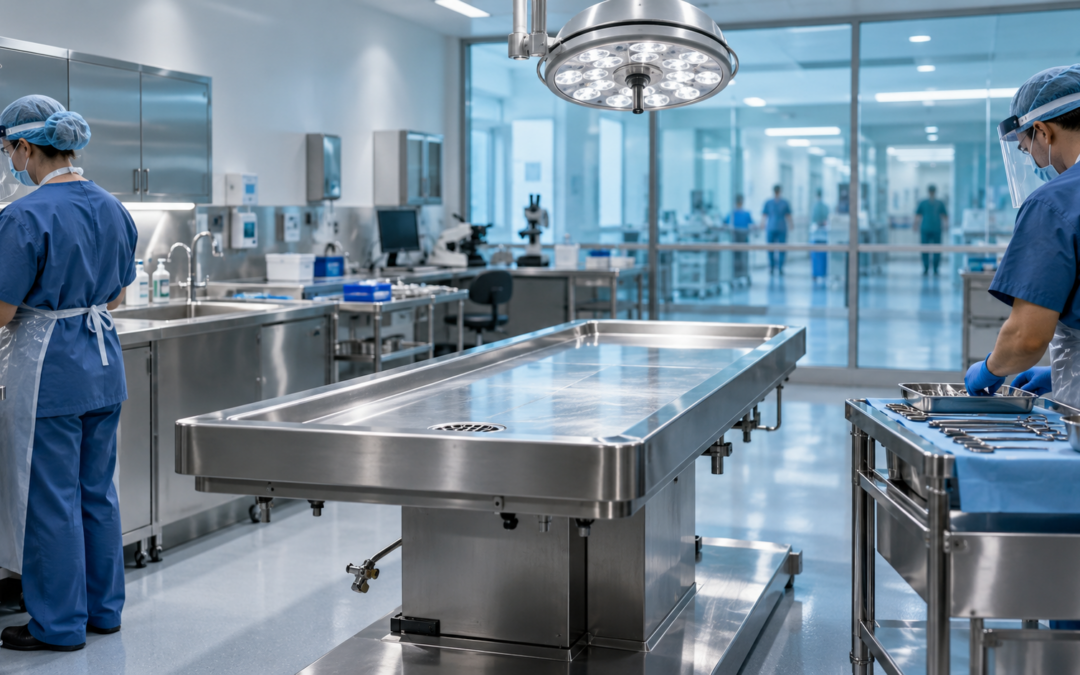
If you have ever asked what a diener does, think of a skilled assistant who keeps the autopsy room moving. Diener services for hospitals let a pathologist focus on the medical work while an experienced professional handles the hands-on tasks. A typical visit looks like this:
- The diener arrives early and prepares the suite.
- They move the deceased from refrigeration to the table.
- They assist with the external examination and take photographs.
- They help with gross dissection under the direction of the pathologist.
- They clean and disinfect the room before leaving.
This model works well for contract autopsy support for hospitals that cannot justify a full-time hire. You pay for the days you need. For details on how this fits a pathology department, visit the hospital services page.
Can a Hospital Outsource Autopsies?
Yes. Independent autopsy services let a hospital send a case to an off-site location instead of running the procedure in house. The autopsy takes place at the provider’s own private morgue, and refrigeration is complimentary. A board certified forensic pathologist leads the examination.
How long does a preliminary autopsy report take? With this option, a verbal preliminary report is usually available within 24 hours. A written final report follows once testing is complete. That speed helps families get answers sooner and gives clinicians time to review the cause of death.
Off-site autopsy services for hospitals also reduce strain on the morgue. The same approach supports coroner and medical examiner offices that need extra capacity. If a case involves tissue or specimen needs, ask about procurement services at the time of referral.
Support for Teaching and Daily Operations
A strong program does more than perform procedures. It also teaches and keeps the morgue running smoothly. Several support options fill common gaps:
- Resident autopsy training: Hands-on dissection sessions help residents build skills.
- Autopsy review conference: Case discussions connect findings to clinical decisions.
- Specimen storage and disposal: Proper handling protects staff and meets rules.
- Morgue attendant services: Attendants transport the deceased and help with hospital morgue management.
You can browse the full list of autopsy and morgue services to match support to your needs. The team can provide support that is customized for each visit, because no two departments work the same way. That approach comes from 30 years of work with private, local, and federal hospitals.
Why Autopsy Findings Matter for Quality Assurance
Autopsy as a quality assurance tool is easy to describe and hard to replace. Recent research on dementia shows why. Studies that confirmed diagnoses by autopsy found that Alzheimer’s disease and Lewy body dementia are often mixed up during life. You can read more about the condition from the National Institute on Aging.
Lewy body dementia misdiagnosis autopsy findings remind hospitals that tissue examination can correct the clinical record. That feedback improves care, supports risk management, and gives families and loved ones closure. Professional groups such as the College of American Pathologists also stress the value of strong autopsy practices.
If you want to know how to run a hospital autopsy program on a limited budget, start with a flexible service plan that fits your caseload.
Conclusion
Hospital autopsy services do not have to disappear because of staffing limits. In-house diener support keeps your suite productive, and independent off-site autopsy gives you a fast, reliable alternative. Teaching and morgue support round out a program that serves quality, training, and families. Whether you manage a community hospital or a federal facility, 1-800-Autopsy can help.
Contact the team today to discuss a consultation. You can also explore options for medical examiner partners or review how to arrange procurement support as part of your plan.
Frequently Asked Questions
Q: Can a hospital outsource autopsies? A: Yes. A hospital can refer cases to an independent provider that performs the autopsy at its own morgue. A board certified forensic pathologist handles the examination, and the hospital receives a verbal preliminary report and a final written report.
Q: What does a diener do? A: A diener assists the pathologist during an autopsy. They move the deceased, help with the external examination and photography, assist with dissection, and clean the room afterward.
Q: How long does a preliminary autopsy report take? A: A verbal preliminary report is usually available within 24 hours. The final report takes longer because lab testing must be finished first.
Q: Why are autopsy rates declining? A: Staffing shortages, limited facilities, cost pressure, and changes to accreditation rules all play a part. The rate now sits below 5 percent, which is why many hospitals look for outside support.
Q: How is a hospital autopsy different from a private autopsy? A: A hospital autopsy is requested by the care team or family to review medical care and cause of death. A private autopsy is arranged by families or legal representatives for answers outside a hospital or coroner case. Private autopsies and hospital autopsies are both performed by a pathologist, and each serves a different need.