When families in the United States file asbestos wrongful death claims, the best medical evidence comes from lung tissue. Many people think asbestos related disease only affects the pleura. But lung-only asbestos autopsy findings give equally strong evidence. Learning how tissue findings and fiber data work together helps build a winning case.
Understanding Lung-Only Asbestos Autopsy Findings
Asbestos wrongful death lung evidence starts with detailed tissue tests during autopsy. Doctors look for specific signs that show asbestos exposure and disease. These lung-only autopsy asbestos cases rely on finding asbestos bodies, scarring patterns, and cell changes. All these point to asbestos as the cause.
The lungs store inhaled asbestos fibers for decades. These fibers build up. They trigger reactions that damage tissue. Even when the pleura shows little damage, the lung parenchyma often has clear proof of asbestos related illness.
This makes lung tissue asbestos fiber analysis critical. It proves asbestos exposure lung tissue in court.
How Asbestos Causes Lung Disease and Long-Term Effects
Understanding lung pathology asbestos legal cases starts with knowing how asbestos causes lung disease. When someone breathes in asbestos fibers, the body cannot clear them out. The fibers stay deep in lung tissue long term. Often for years or decades.
The immune system tries to remove these materials. But asbestos resists breakdown.
This ongoing inflammation slowly damages tissue. It can lead to scarring, cell mutations, and cancer.
Common asbestos related diseases include asbestosis, asbestos related lung cancer, and interstitial lung disease. Each type leaves distinct signs. Experts can spot these in a tissue sample.
The Role of Asbestos Fiber Burden Testing
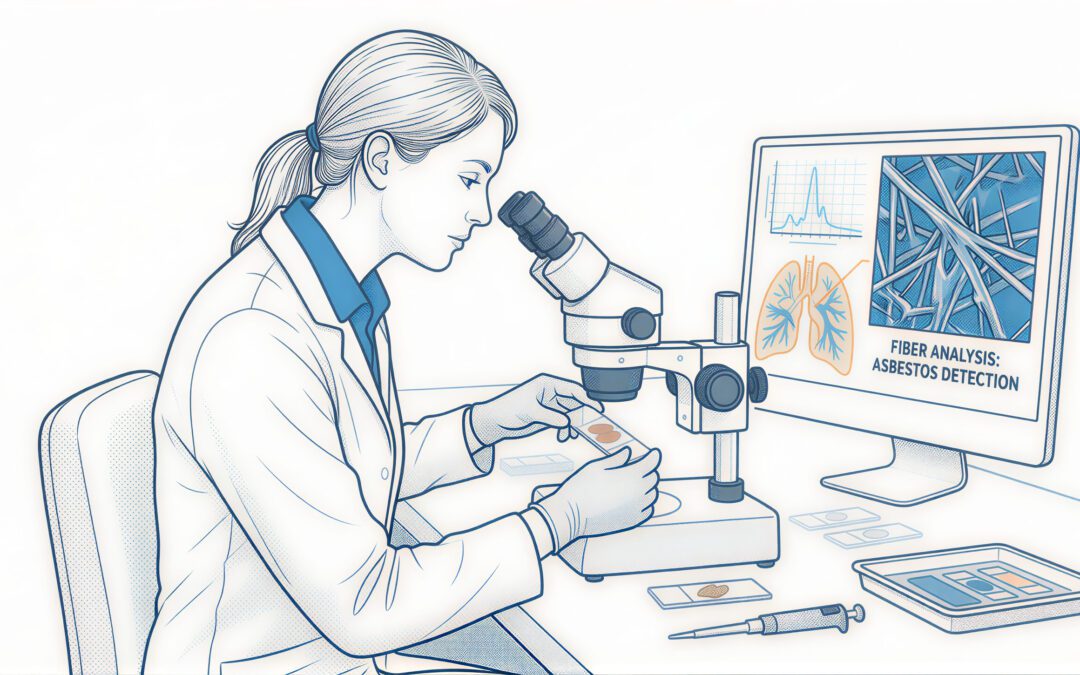
One of the best forms of asbestos wrongful death case evidence comes from asbestos fiber burden testing lungs. This lab test counts the number and type of asbestos fibers per gram of dry tissue.
Fiber burden analysis gives clear data. It links exposure to disease.
Labs use electron microscopy to identify the type of asbestos. This includes chrysotile, amosite, or crocidolite. They also measure fiber size.
Higher fiber counts usually mean greater exposure. But even moderate amounts can prove causation.
This testing helps in the legal process. The number results are hard to argue against.
Juries understand them easily. When an expert says lung tissue had millions of asbestos fibers per gram, the link is clear. Exposure led to disease.
Pleural Patterns and Lung Parenchyma Evidence
Understanding pleural patterns asbestos exposure proof shows the full picture of asbestos damage. The pleura often shows changes. These include plaques or thickening. However, many valid cases have minimal pleural damage.
When pleural findings are weak, doctors focus on the lung parenchyma itself. They look at scarring distribution, asbestos bodies, and injury patterns. Asbestos bodies are fibers coated with iron-protein.
These internal lung changes can be just as useful. They often show how the injury happened. Detailed records through postmortem lung-only autopsy can prove causation better than pleural findings alone.
Medical Proof and Expert Testimony
Every successful claim needs a detailed pathology report. It must show asbestos attribution lung pathology.
Expert pathologists specialize in work-related lung disease. They know how to separate asbestos related illness from other lung problems.
Their reports cite medical research. This strengthens the science behind the claim.
The pathology report becomes key evidence in asbestos litigation. Combined with work history and witness statements, detailed findings tell a strong story. They connect the work environment to death.
Asbestos lung findings expert testimony translates complex data. Experts make it clear for juries. During testimony, they explain how lung tissue findings match known patterns of asbestos related disease.
They may use photos of tissue sections. They might show diagrams of fiber distribution. This connects microscopic findings to the person’s history of asbestos exposure.
Good experts also address the long latency period. This is the time between exposure and disease. They cite established research on dose-response relationships.
Their credibility depends on their credentials. It also depends on their ability to explain complex medical ideas clearly.
Building Your Case Strategy
For families working with an asbestos wrongful death lawyer near me, knowing how lung evidence fits is valuable. Lawyers develop approaches. These include work history, witness testimony, and medical records.
Lung tissue analysis asbestos exposure serves as the objective medical foundation. Employment records might show potential exposure. But the physical presence of asbestos fibers in lung tissue provides solid proof.
The pathology changes document the disease process. They establish medical causation.
Lawyers work with pathologists early. This ensures that we collect and save proper tissue samples. The goal is creating a clear chain of evidence. From exposure to disease to death.
Documentation Standards and Asbestos Containing Products
Proving asbestos exposure lung tissue requires careful records. This starts with proper collection and handling of autopsy samples. Chain of custody tracks every step. From tissue sample collection through final analyzing.
The best cases combine detailed work history with tissue findings. Lawyers establish when, where, and how exposure happened. Then they show the pathology findings match that exposure history.
This requires investigating work sites. It also means identifying asbestos containing products used.
Witness testimony can describe dusty conditions. Lack of protection. Direct handling of materials.
Combined with lung tissue examining specific fiber types, the evidence becomes powerful. The fibers match those work environments.
Experts must explain how the person’s exposure history fits expected timelines. This matters because of the long latency period of asbestos diseases.
Understanding Asbestos Trust Funds and Legal Deadlines
Many families pursuing claims may qualify for money through asbestos trust funds. Companies that made or used asbestos-containing products created these funds.
Later these companies filed bankruptcy. The trusts pay victims and family members. No lengthy court battles needed.
The legal process starts with gathering medical proof asbestos wrongful death. This includes autopsy findings and records of exposure history.
An experienced lawyer guides the family member through identifying responsible parties. They help file claims. They ensure you meet statute of limitations requirements.
Time limits vary by state. But most impose a statute of limitations. It starts from the date of death or diagnosis.
Acting quickly ensures families keep their legal rights. They can access compensation through both trust claims and asbestos lawsuits.
Specialized Autopsy Services
Access to specialized autopsy services can make the difference. Between success and dismissal. Standard hospital autopsies may not include the detailed lung sampling needed for court cases.
Private autopsy services focus on forensic pathology. They bring specific expertise. They know which tissue samples to collect. Which tests to order. How to address legal questions.
Family members should talk to lawyers early. Ideally before autopsy. This ensures proper tissue collection.
Postmortem examinations focused on lung findings provide the detailed evidence needed. When performed by experienced specialists.
Comparing Lung Tissue Analyzing to Chest X Rays
Chest x rays help diagnose asbestos related disease during life. But they provide limited information compared to direct lung tissue examination. Imaging studies can show plaques, scarring, or masses. But they cannot say for sure what caused these changes.
Lung tissue analyzing offers key advantages over chest x-rays. Microscopic examination identifies asbestos bodies and fibers directly. It measures exact fiber burdens.
It assesses specific damage patterns. This detail allows pathologists to separate asbestos related illness from other lung conditions. With greater certainty.
For families pursuing wrongful death claims, combining medical records with autopsy findings provides the strongest case. Medical records show disease getting worse over time. Autopsy findings prove what caused it. Understanding the harm from exposing individuals to asbestos helps show why thorough investigation matters.
Frequently Asked Questions
What makes lung tissue examination stronger evidence than chest X-rays in asbestos cases?
Lung tissue analyzing provides direct microscopic proof of asbestos fibers and their effects. Chest x rays only show disease results. They do not identify the cause.
Tissue analysis can identify asbestos bodies. It measures fiber burdens. It documents injury patterns pointing to asbestos. This microscopic evidence is much harder to dispute.
How long does asbestos fiber burden testing take?
Testing typically takes several weeks. The process involves breaking down lung tissue samples. Preparing them for electron microscopy. Counting fibers. Creating a detailed report.
Labs maintain quality standards. This requires careful work. But the objective data is worth the wait.
Can lung findings prove asbestos exposure without documented work history?
Yes. Lung tissue with significant asbestos fiber burdens can prove exposure. Even when work history records are missing. The physical presence of fibers provides objective evidence.
Exposure occurred. However, finding the source and timing may need additional investigation. To identify specific asbestos containing products.
Do all asbestos wrongful death cases require fiber burden testing?
Not all cases require formal testing. But it strengthens evidence significantly. Cases with clear history of asbestos exposure may proceed based on standard examination.
However, fiber burden testing provides objective support. It can be decisive in contested asbestos litigation.
What is the statute of limitations for filing an asbestos wrongful death claim?
The statute of limitations varies by state. It typically ranges from one to three years. From the date of death. Or when the family member discovered asbestos caused the death.
Some states provide extensions. For cases involving the long latency period of asbestos related disease. Talking to a lawyer quickly helps preserve legal rights.
How do experts distinguish asbestos related lung cancer from other lung cancers?
Experts examine cancer patterns. Location in the lung parenchyma. Associated findings.
Presence of asbestos bodies and fibers. Cancer cells may look similar regardless of cause. But context matters.
Finding significant asbestos burdens and asbestosis in the same lung as cancer supports asbestos as a cause. Especially with appropriate work history. Showing exposure to asbestos containing products.